Hair loss has become a common concern among both men and women. Modern hair restoration techniques now provide natural and long-lasting solutions for baldness and thinning hair. Among the most discussed procedures are dense packing hair transplant and normal hair transplant. While both procedures aim to restore hair growth, they differ in graft density, appearance, planning, and overall results.
If you are considering a hair transplant, understanding the difference between these two methods can help you choose the right treatment according to your hair loss condition, scalp quality, and expectations.
What is a Normal Hair Transplant?
A normal hair transplant is a standard procedure where hair follicles are extracted from the donor area, usually the back of the scalp, and implanted into bald or thinning regions.
In a traditional procedure, surgeons place grafts with moderate spacing to ensure healthy blood supply and proper healing. The primary goal is to provide natural-looking coverage rather than extremely high density.
This technique is commonly recommended for patients with moderate hair loss, limited donor hair, or early-stage baldness.
What is Dense Packing Hair Transplant?
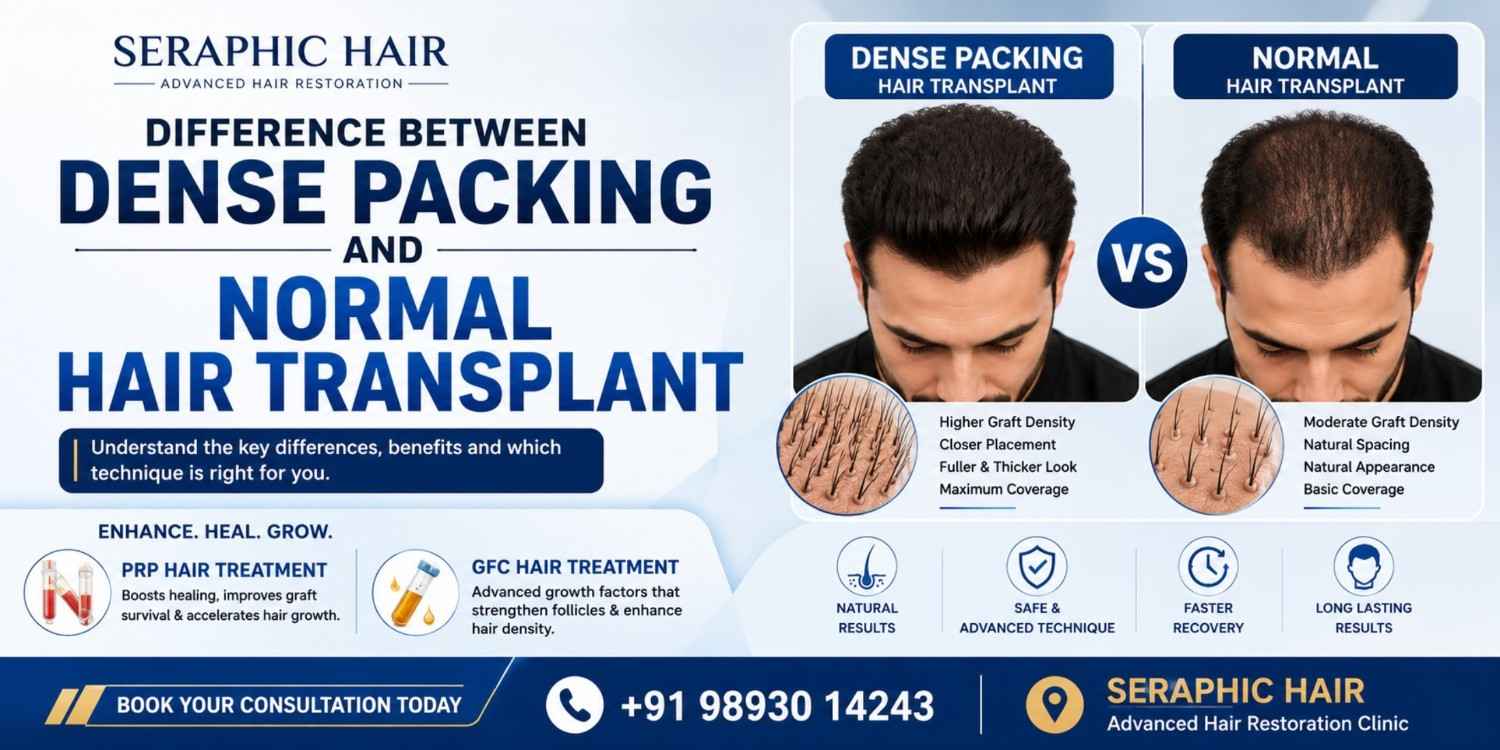
Dense packing is an advanced hair transplantation technique where a higher number of grafts are implanted closer together in a single session. This creates fuller, thicker, and more natural-looking hair density.
Dense packing requires advanced surgical expertise because the grafts are placed very close to one another without damaging blood circulation in the scalp.
Patients who want maximum density, especially in the front hairline and crown area, often prefer dense packing procedures performed by the best hair transplant doctor in Indore or experienced specialists.
Main Difference Between Dense Packing and Normal Hair Transplant
1. Hair Density
The biggest difference lies in the number of grafts implanted per square centimeter.
- Normal hair transplant offers moderate density
- Dense packing provides significantly higher density
Dense packing creates a fuller look that closely resembles natural hair growth.
2. Procedure Complexity
A normal procedure is technically simpler and suitable for most patients. Dense packing, however, requires greater precision, advanced planning, and experienced graft handling.
Improper dense packing may damage graft survival if performed by inexperienced surgeons.
3. Graft Requirement
Dense packing usually requires more grafts in a single session compared to a standard transplant. Patients with a strong donor area are ideal candidates for this procedure.
A detailed scalp analysis helps determine whether dense packing is possible.
4. Recovery and Healing
Healing time is generally similar in both procedures, but dense packing may cause slightly more redness or swelling initially because of the higher number of graft implantations.
Proper aftercare and supportive therapies like PRP hair treatment help improve healing and graft survival.
5. Final Appearance
A normal transplant provides natural coverage, while dense packing creates thicker and fuller results. Dense packing is especially beneficial for:
- Front hairline restoration
- Celebrity-style hair density
- High-definition hairline design
- Advanced cosmetic enhancement
Who Should Choose Dense Packing?
Dense packing is suitable for patients who:
- Want maximum hair density
- Have a healthy donor area
- Need frontal hairline correction
- Have stable hair loss
- Prefer premium aesthetic results
Patients seeking dramatic transformation often choose dense packing procedures during their hair transplant in Indore consultations.
Who Should Choose a Normal Hair Transplant?
A normal hair transplant may be ideal for individuals who:
- Have limited donor grafts
- Need basic hair coverage
- Are in early stages of hair loss
- Prefer gradual improvement
- Want a budget-friendly procedure
The right choice depends on scalp condition, donor capacity, age, and future hair loss progression.
Importance of PRP Hair Treatment After Transplant
Whether you choose dense packing or a normal procedure, PRP hair treatment can significantly improve outcomes.
PRP (Platelet-Rich Plasma) therapy uses concentrated growth factors from the patient’s blood to stimulate healing and strengthen hair follicles.
Benefits of PRP after hair transplant include:
- Faster healing
- Better graft survival
- Reduced hair fall
- Improved hair thickness
- Enhanced scalp health
Many leading clinics combine PRP sessions with hair restoration procedures for better long-term results.
Role of GFC Hair Treatment in Hair Restoration
Another advanced option gaining popularity is GFC hair treatment. GFC (Growth Factor Concentrate) therapy contains purified growth factors that stimulate inactive hair follicles and promote stronger growth.
Compared to traditional PRP, GFC therapy is more concentrated and often provides longer-lasting regenerative benefits.
Benefits of GFC therapy include:
- Stronger hair follicles
- Reduced thinning
- Faster recovery after transplant
- Improved density and texture
- Better scalp nourishment
Combining GFC hair treatment with dense packing can improve overall transplant success and natural appearance.
Why Surgeon Expertise Matters
Dense packing is a highly skilled procedure that should only be performed by experienced specialists. Poorly executed dense packing can damage blood supply, reduce graft survival, and produce unnatural results.
Choosing the best hair transplant doctor in Indore ensures proper graft placement, natural hairline design, and safe implantation techniques.
Experienced surgeons carefully evaluate:
- Donor hair quality
- Scalp flexibility
- Hair texture
- Facial structure
- Future hair loss patterns
This customized planning helps achieve long-lasting and natural outcomes.
Final Thoughts
Both dense packing and normal hair transplant procedures are effective solutions for hair loss, but the right option depends on individual goals and scalp condition.
A normal hair transplant provides natural coverage and is suitable for many patients, while dense packing offers higher density and premium cosmetic results. Supportive treatments like PRP hair treatment and GFC hair treatment further improve healing, graft survival, and overall hair quality.
If you are planning a hair transplant in Indore, consulting an experienced specialist is the best way to determine which technique matches your hair restoration goals. With the right treatment plan and expert care, you can achieve natural, fuller, and confidence-boosting results.